KOPIA Center (RDA)
Joint projects since 2015 on cattle development, the TMR technology, selection and breeding.
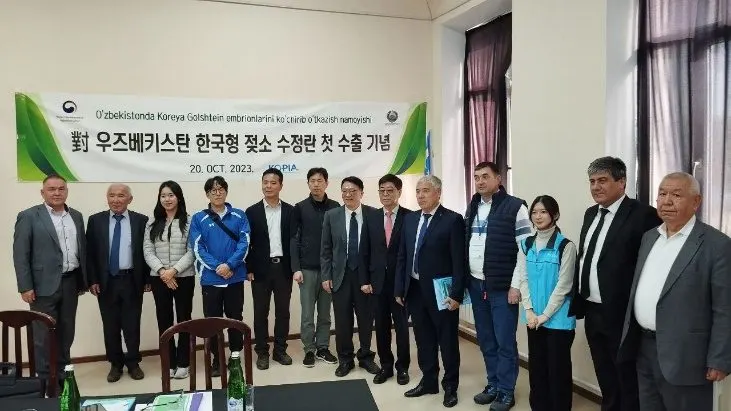
Joint projects since 2015 on cattle development, the TMR technology, selection and breeding.
Cooperation under the EU-funded EU-AGRIN project.
Cooperation on forage crop variety samples and an electronic database.
Listed in the book among the Institute’s foreign partners.
Research cooperation in sheep and goat breeding.
Listed in the book among the Institute’s foreign partners.
Listed in the book among the Institute’s foreign partners.
Listed in the book among the Institute’s foreign partners.
Listed in the book among the Institute’s foreign partners.
Source: the Institute’s book (Tashkent, 2024). Information is given as of 2024.
Projects
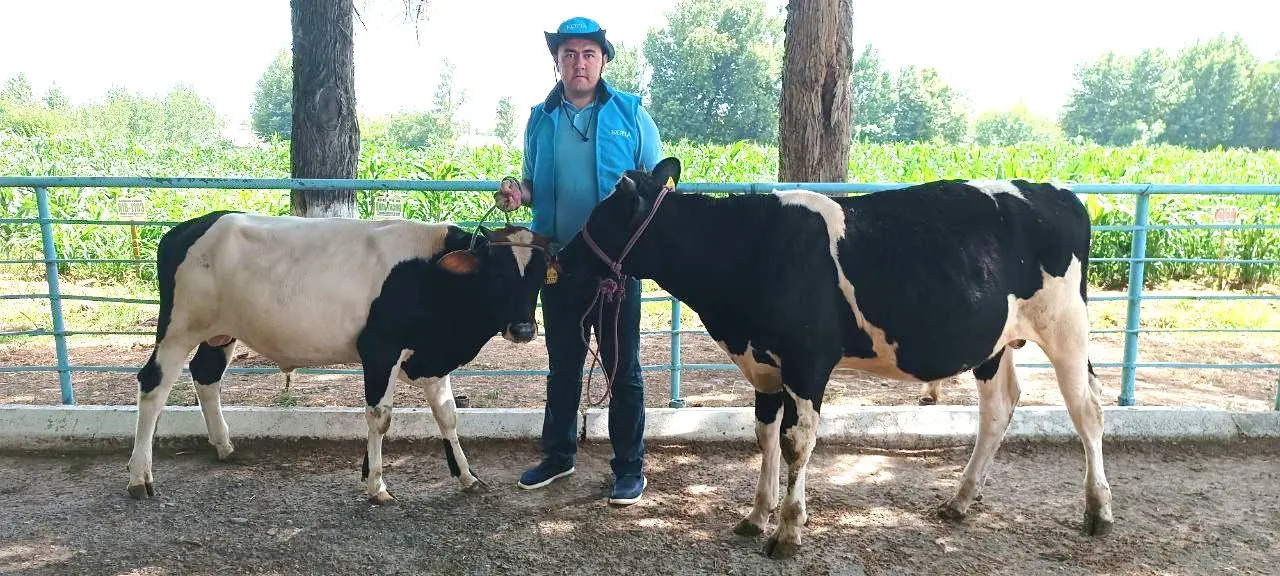
Since 2015 cattle-development projects have been carried out with the KOPIA Center; local cattle in nearly 600 households have been raised using the TMR technology.
Read moreTogether with the KOPIA Center, semen of high-yielding Korean Holstein bulls was imported and artificial insemination carried out on 14 farms.
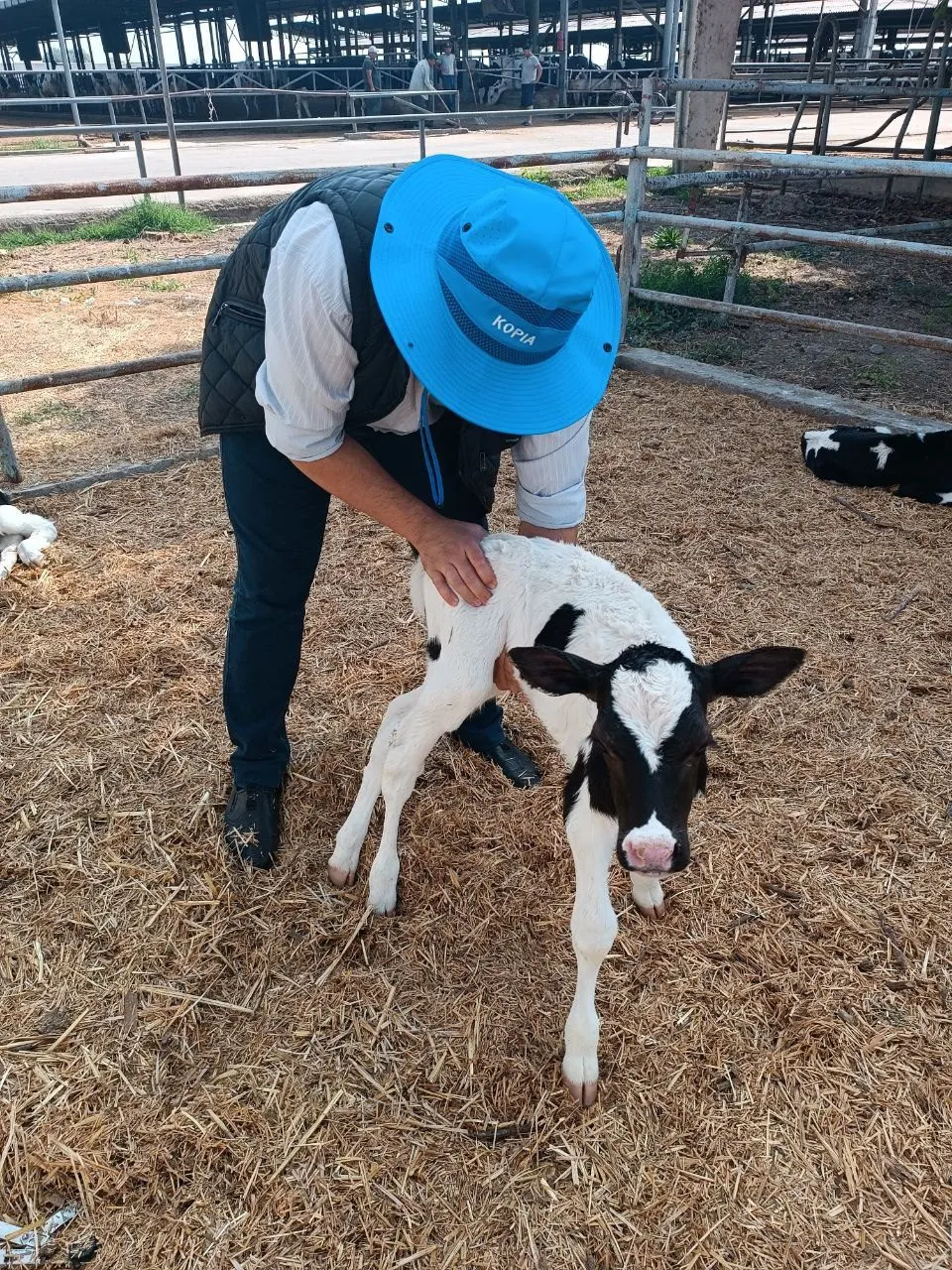
Read moreIn 2023 embryos from high-yielding Holstein cows were imported from the USA and South Korea and transplanted on three farms in Tashkent region.
Read moreUnder EU-AGRIN — funded by the European Union and implemented by UNDP with the Ministry of Agriculture — scientists of the Ohangaron branch run an innovation project on m…
Read moreTo build an electronic database from ICARDA and Institute data, 84 variety samples were sown in 2023 and 32 selected; these were sown on the experimental farm in 2024.
Read moreAccording to the Institute’s book, it has cooperated for many years with the KOPIA Center (RDA, Republic of Korea), UNDP Uzbekistan, the University of Giessen (Germany) and research institutions and universities in Russia, Kazakhstan, Kyrgyzstan and Tajikistan.
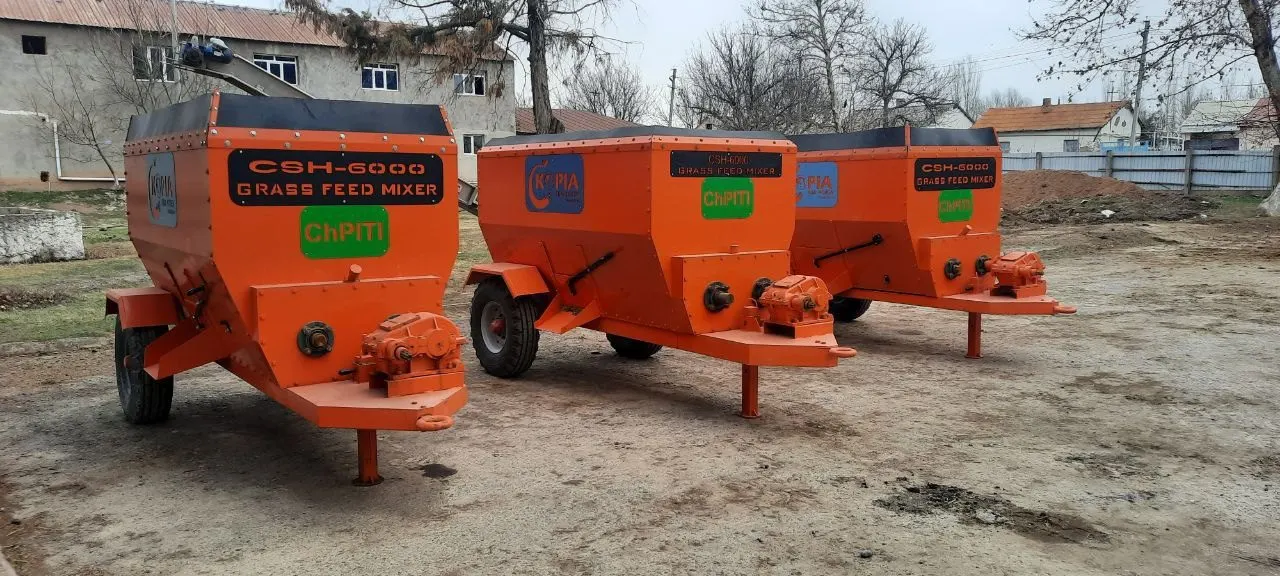
Since 2015 joint projects with KOPIA have supported cattle production. The TMR technology was introduced in nearly 600 households across the country: milk yield rose by up to 30%, live-weight gain of bull calves by up to 20%, meat quality by 4 points, feed consumption fell by up to 20% and household income grew by up to 20%. “Mini mixers” of two sizes were developed. Artificial insemination with semen of Korean-bred Holstein bulls was carried out on 14 farms, and in 2023 embryo transplantation was performed on three farms in Tashkent region.
The Ohangaron branch runs an innovation project under EU-AGRIN (EU, UNDP and the Ministry of Agriculture) on artificial insemination of meat-and-wool Merino sheep.
Source: the Institute’s book (Tashkent, 2024). Information is given as of 2024.